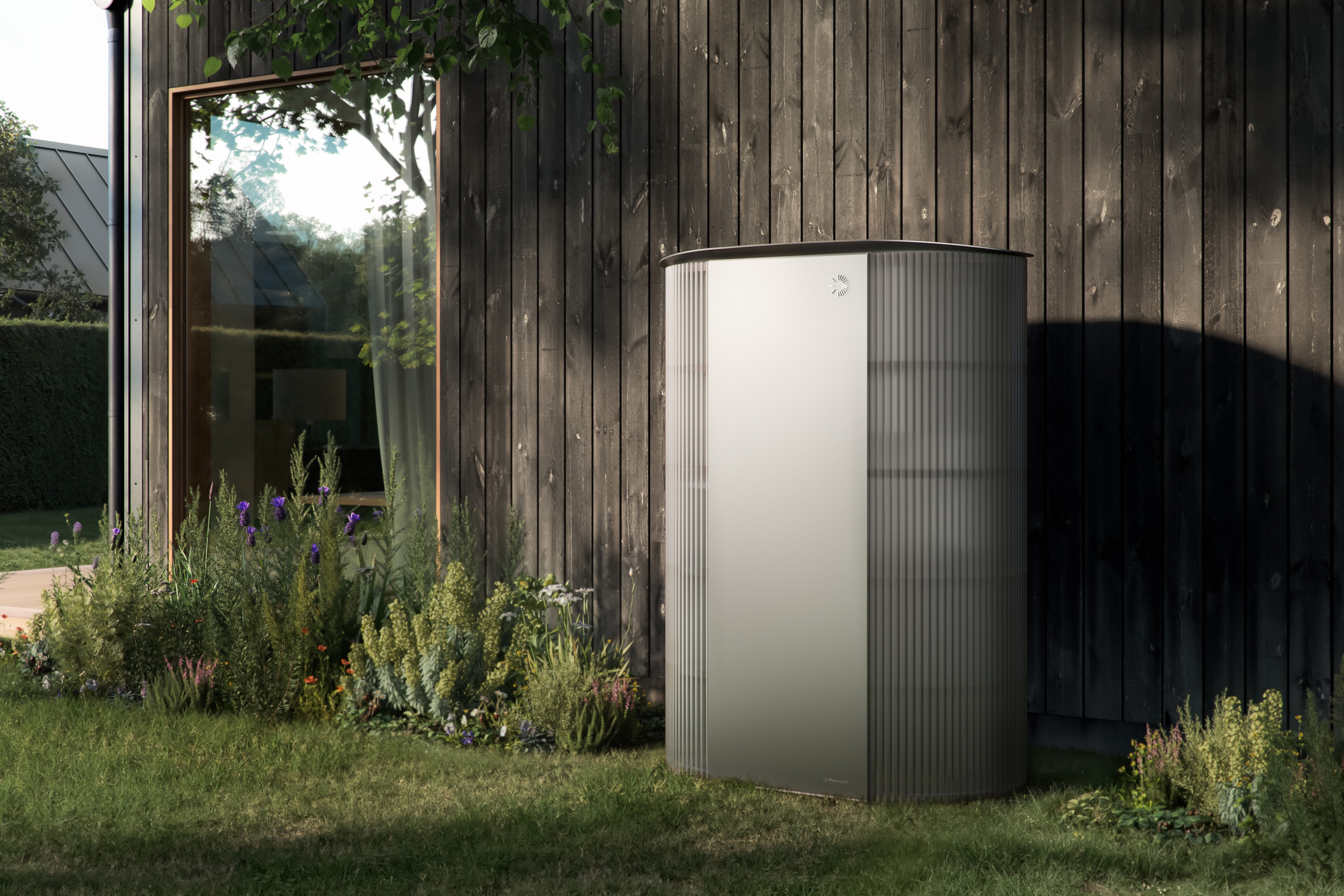
How Photoncycle works: Turning summer sun into winter power
Elina Koivisto
Most home energy systems solve only part of the problem. Solar panels generate electricity during the day, and batteries store some of it for later use. But neither addresses the biggest challenge in Northern Europe: the seasonal gap between energy production and energy demand.
Photoncycle is designed to solve that full cycle. It captures energy when it is abundant in summer, stores it efficiently over long periods, and releases it when your home needs it most in winter.
This is how it works.
From sunlight to usable electricity
The system begins with solar panels, which convert sunlight into electricity throughout the year. In a typical Northern European home with around 100 square meters of roof area, this can generate between 20 and 25 megawatt-hours annually.
However, the fundamental challenge is not how much energy is produced—it is when it is produced.
In Northern Europe, the vast majority of solar energy is generated during the summer months, when days are long and demand for heating is low. In contrast, winter brings short days, limited solar production, and peak energy demand driven by heating and hot water needs. This creates a structural mismatch: energy is abundant when it is least needed, and scarce when it matters most.
During the summer months, production often exceeds immediate household demand—sometimes significantly. Today, this surplus is typically exported to the grid at low value or simply underutilized. At the same time, households remain dependent on external energy sources during winter, often relying on fossil-based systems to bridge the gap.
Photoncycle is designed to solve exactly this imbalance. Instead of treating surplus energy as excess, the system captures it and prepares it for long-term storage—effectively shifting energy availability from summer to winter.
Converting surplus energy into hydrogen
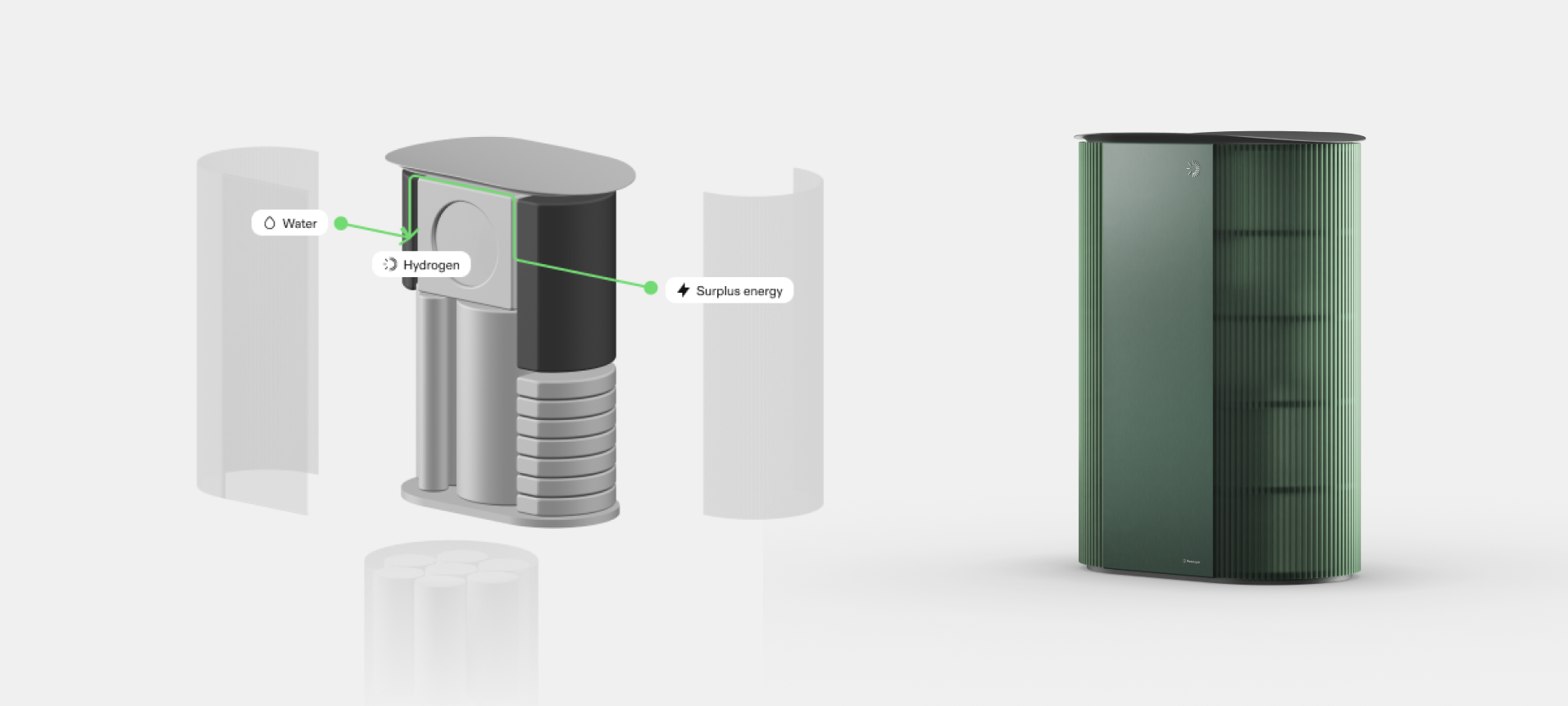
When there is more electricity than the home requires, the system uses that surplus to split water into hydrogen and oxygen.
This process is powered by a reversible fuel cell, a key component that enables the system to both store and release energy within the same unit. Unlike conventional systems that separate these functions, the reversible fuel cell integrates electrolysis and power generation into one compact, highly efficient process—reducing complexity while improving overall system performance.
What makes this technology particularly powerful is its dual function. In the summer, it converts electricity into hydrogen for storage. In the winter, it reverses the process, converting stored hydrogen back into electricity. This creates a closed, circular energy system within the home.
A breakthrough in hydrogen storage
Hydrogen has long been seen as a promising energy carrier, but storing it efficiently and safely has been a major barrier to residential use. Traditionally, hydrogen requires either high-pressure tanks or extremely low temperatures—both of which introduce complexity, cost, and safety considerations that make them impractical for everyday homes.
Photoncycle overcomes this challenge with a patented solid-state storage technology. Instead of storing hydrogen as a compressed gas, it is absorbed and stored within a solid material at low pressure. This fundamentally changes how hydrogen can be used in a residential setting—making storage not only safer, but also far more stable and easier to integrate into a compact system.
This approach also unlocks a step-change in energy density. Because hydrogen is stored within a material rather than as a gas, significantly more energy can be stored in the same physical space. In practical terms, Photoncycle achieves around twenty times the energy density of a lithium-ion battery, without the same degradation over time.
Just as importantly, this form of storage is inherently suited for long durations. Where batteries are optimized for daily cycling, solid-state hydrogen storage enables energy to be stored for months with minimal losses. This is what makes true seasonal storage possible.
In other words, this is not just a different way to store energy—it is what allows energy to be shifted across seasons, turning summer surplus into a reliable winter resource for the home.
Storing energy for months, not hours
Once processed, the hydrogen is stored in a dedicated underground unit. This storage system is designed for long-term capacity, holding up to 10,000 kilowatt-hours of energy.
To put that into perspective, this is roughly 700 times the capacity of a standard home battery. Instead of bridging energy needs over a few hours or days, Photoncycle enables storage across entire seasons.
Energy generated in summer can now be used months later, during the coldest and darkest parts of the year.
From storage back to energy: the winter cycle
When winter arrives and solar production drops, the system begins to reverse the process.
Hydrogen is gradually released from storage and converted back into a usable gas form in controlled amounts. This ensures stable and efficient operation within the home.
The reversible fuel cell then converts the hydrogen into electricity. This electricity can power the home directly, reducing reliance on the grid, or it can be exported when market conditions are favorable.
Turning waste into warmth
An important advantage of the Photoncycle system is that it does not only produce electricity. The conversion process also generates heat as a byproduct.
Rather than losing this energy, the system captures and upgrades it through an integrated heat pump. This heat can then be used to warm the home and supply hot water, further increasing overall system efficiency.
This integrated approach means that both electricity and heating needs are addressed within a single, coherent system.
A new way to think about home energy
The transition away from fossil-based heating is accelerating, and homeowners are facing increasing uncertainty around energy prices and supply. Traditional solutions, such as batteries, offer only short-term storage and do not address seasonal imbalances.
Photoncycle introduces a different approach. By enabling long-term energy storage and combining electricity and heating into one system, it gives homeowners greater independence and control.
More importantly, it shifts the role of the home from being a passive energy consumer to an active energy manager—capable of storing, using, and even trading energy across seasons.
The bigger picture
At its core, Photoncycle is not just about technology. It is about aligning energy supply with real human needs over time.
Instead of asking, “How do we store energy for tonight?” it answers a much bigger question:
How do we store energy from summer to winter?
Join the next generation of home energy
Be among the first to follow Photoncycle and get early access, updates, and insights as we redefine how homes store and use energy by subscribing to our Waitlist.